

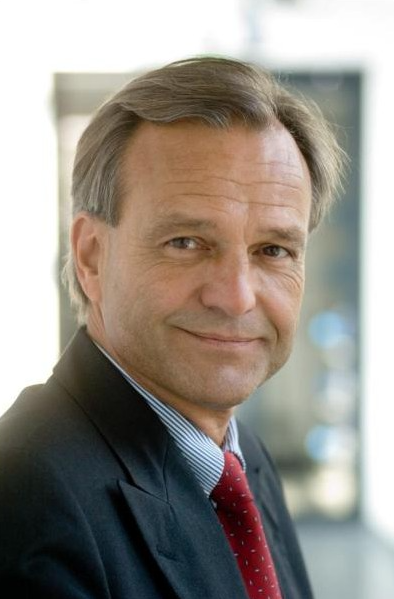
Karsten Danzmann
Director, Albert Einstein Institute (AEI), Hannover Max Planck Institute for Gravitational Physics and Institute for Gravitational Physics, Leibniz University Hannover
Title of Keynote Speech: “Gravitational Wave Astronomy: We can hear the dark universe!”
Karsten Danzmann was born in 1955. He was a director at the Max Planck Institute for Gravitational Physics (Albert Einstein Institute) from 2002 until his retirement at the end of March 2026. Since 1993, he has been a professor at Leibniz University Hannover, where he headed the Institute for Gravitational Physics.
The physicist is regarded as one of the world’s leading scientists in the field of experimental gravitational physics. Researchers in his department “Laser Interferometry and Gravitational-Wave Astronomy” develop and operate large gravitational-wave detectors on Earth and in space. They also play a key role in the development of the Einstein Telescope, the planned next-generation European detector.
Karsten Danzmann
Director, Albert Einstein Institute (AEI), Hannover Max Planck Institute for Gravitational Physics and Institute for Gravitational Physics, Leibniz University Hannover
Title of Keynote Speech: “Gravitational Wave Astronomy: We can hear the dark universe!”
Karsten Danzmann was born in 1955. He was a director at the Max Planck Institute for Gravitational Physics (Albert Einstein Institute) from 2002 until his retirement at the end of March 2026. Since 1993, he has been a professor at Leibniz University Hannover, where he headed the Institute for Gravitational Physics.
The physicist is regarded as one of the world’s leading scientists in the field of experimental gravitational physics. Researchers in his department “Laser Interferometry and Gravitational-Wave Astronomy” develop and operate large gravitational-wave detectors on Earth and in space. They also play a key role in the development of the Einstein Telescope, the planned next-generation European detector.